

Much like a researcher, a choreographer creates, imagines, experiments, investigates, interprets, innovates, deconstructs, stumbles, begins anew, explores, invents, and persists—all to build a story that is constantly unfolding and always in motion. Bringing dance together with research into Alzheimer’s disease was a bold and daring undertaking. It was bold, in that approaching such an emblematic, mysterious, and elusive condition requires humility, discretion, and respect. It was daring, because staging Alzheimer’s forces us to move beyond our own prejudices and deepest fears, allowing us to touch upon an identity that may be wavering, yet a humanity that remains present despite the illness.
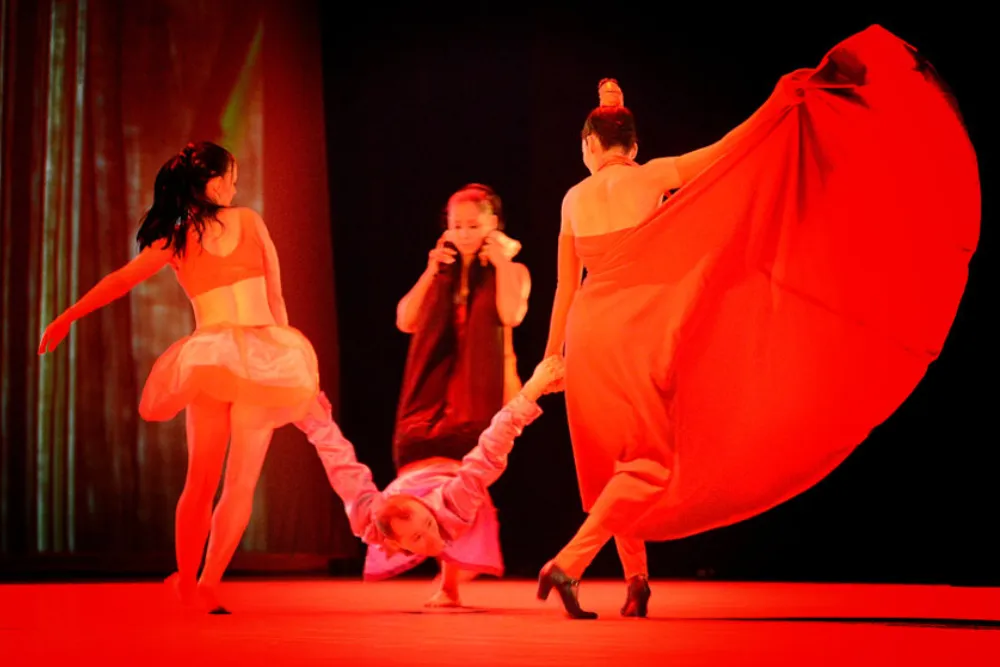
*Lost Paradise*—a modern, socially engaged ballet—is the result of this unique encounter; an encounter that feels entirely natural, given that love knows neither time nor fear, even when memory and recollections begin to fade. Gaining a deeper understanding of the true nature of humanity is, perhaps, one of the many things that dance and science have in common.
This ballet was encouraged and supported by AMPA with the goal of raising public awareness about Alzheimer’s disease, on the occasion of World Alzheimer’s Day, held on September 21, 2013, in Monaco. Paradis Perdu Premier
Contemporary ballet about Alzheimer’s disease
Based on an original concept by Doris Eberle
Danza Espiral Company – Cuba
Choreography: Liliam Padrón
Music: José Antonio Mendez Padrón
Set design and costumes: Zenén Calero
Video: José Luis Guerrero Darias
Patrons: Aline Floriel-Destezet, Stéphanie Labrouche, France Majoie Le Lous